 Preferred Store:
 My Account Sign-In








Sign-up for {N}power to get exclusive discounts, newsletters, members-only features, and more!
"Data centers are “the largest single points of consumption of electricity in history."
— Jesse Jenkins, Princeton climate modeler, speaking to The Atlantic in 20261
As the race for global AI dominance accelerates, tech companies are primarily increasing AI’s “intelligence” not by way of more clever code, but rather by sheer size and number.2 3 More data is being pushed through more powerful computer chips, and that requires unprecedented levels of electricity. Siddharth Singh, of the International Energy Agency, says that by 2030 the electrical consumption of U.S. data centers will be greater than that of all the nation’s heavy industries combined—including steel, automotive, chemical, and cement.4
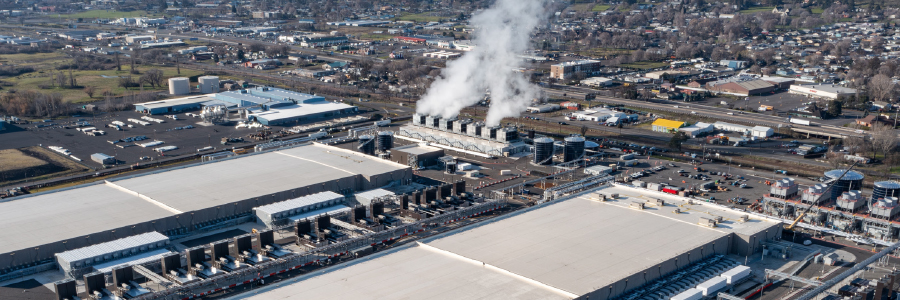
Currently, the average operating data center consumes enough electricity to light up a town of 56,000 people. The average planned one will require enough for a city of 500,000. And a mega facility like the campus being built in Homer City, Pennsylvania, will consume as much as every residence in the Philadelphia urban area—a population of 5.7 million.5 Yet this breakneck growth in energy demand poses significant risks, including rising emissions and instability in a grid unprepared for the surge in consumption.
With long waits to connect to traditional utilities and public backlash over potential increases in energy bills, AI’s big names are increasingly seeking to bypass the grid.6 They’re counting on “behind-the-meter” power projects, dedicated solely to data centers, and natural gas is the fuel of choice.7 8 In January 2026, Global Energy Monitor, a nonprofit oil and gas tracking organization, released research showing almost 100 gigawatts of behind-the-meter natural gas power in the development pipeline for U.S. data centers. That’s a dramatic increase from the four gigawatts tracked for the same use at the beginning of 2024, and the potential emissions from these projects could exceed 129 million tons of greenhouse gases per year, according to a WIRED review of air permits.9
Coal produces more than twice the carbon dioxide (CO2) emissions of natural gas per kilowatt-hour of electricity generated, yet experts suggest we’re “under-accounting” natural gas’ global warming contribution. More than 95 percent of processed natural gas is made up of methane—an even more potent greenhouse gas.11 When the gas is burned, methane turns into CO2; however, natural gas is notorious for leakage—from drill sites to processing plants to pipes—allowing methane to escape into the atmosphere along the way.12 13And a 2023 study involving researchers from Brown University, Harvard, Duke, and NASA found that a leakage rate as low as 0.2 percent can make natural gas as big a driver of climate change as coal.14 Meanwhile, coal plants are also being kept online longer to feed AI’s massive energy demands.15
Underscoring the issues plaguing AI’s energy consumption is a “very old” electric grid suddenly facing “exponential, explosive demand” after decades of stagnation. This is how Laura Swett, chair of the Federal Energy Regulatory Commission, the agency responsible for grid connections and pipeline approvals, described the situation as reported by Fortune this March.16 And in May, the North American Electric Reliability Corp (NERC) issued a rare Level 3 alert—its highest level, stating that “the grid faces unprecedented challenges from a surge in large power consumers.”17 The organization predicts summer peak demand “across the bulk power system” will rise 24 percent over the next decade, primarily due to data center use.18
Data center emissions could become “one of the fastest-growing sources of greenhouse gases in the world,” according to the International Energy Agency.19 Yet, while 57 percent of Americans rate AI’s risks to society as high, according to a Pew Research survey, only two percent of those respondents flagged environmental impact as their main concern.20 Meanwhile, by 2030, roughly half of U.S. data center electricity demand is expected to come from facilities equipped for generative AI—the kind most of us know through tools like ChatGPT.21 Is it time, perhaps, to consider AI use a significant factor in our environmental footprint?
Sign-up for {N}power to get exclusive discounts, newsletters, members-only features, and more!