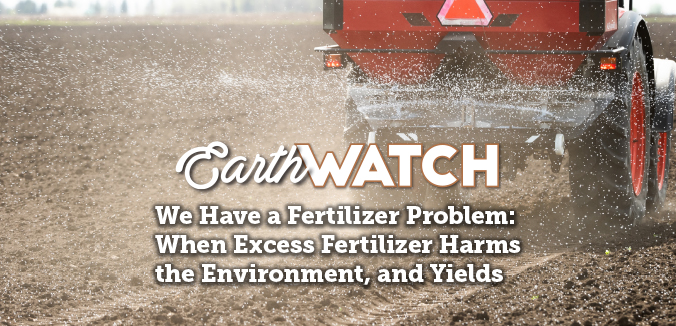
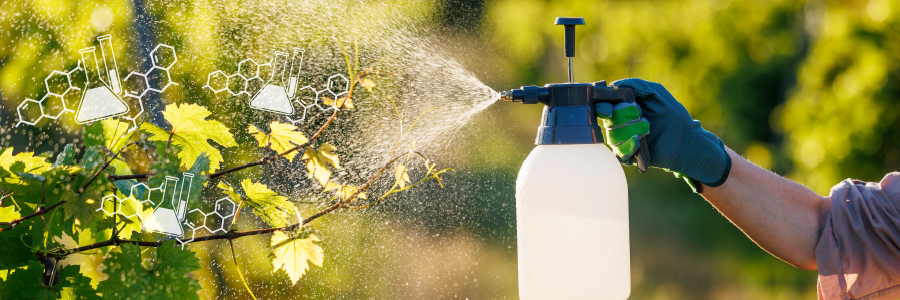
Three new PFAS-based pesticides are under review by the Environmental Protection Agency (EPA), with two others approved in 2025.3 Meanwhile, at least 66 such substances are already authorized for U.S. agricultural use, and the country’s top food-producing state, California, spreads 2.5 million pounds of them across its farmland annually.4 5 6 A 2025 analysis by the Environmental Working Group (EWG) mapped yearly PFAS pesticide use in California and found some of the state’s most valuable crops are affected—including almonds, pistachios, and wine grapes.7
Is it equivalent to spraying Teflon on crops?
Defining PFAS is complicated: this class of chemicals is thousands-strong, varying in structure, impact, and—most importantly—data.8 9 10 11 They are broadly characterized by fluorination, which forms a supernaturally strong bond between carbon and fluorine atoms, making them useful for industrial applications such as grease-, water-, and stain-resistant coatings.12 13 Some of the original PFAS, like those used in non-stick cookware (e.g., Teflon), are practically indestructible—able to persist in the environment for centuries, all the while accumulating in the human body.14 15 16 Research has linked them to serious health issues, including immune dysfunction, some cancers, developmental and reproductive toxicity, and liver damage.17 18 19 20 In the case of pesticides, their strength appeals to the agrochemical industry for increased stability and efficiency.21
A defining controversy
Yet even as organizations like the EWG and food system-focused publication Civil Eats raise questions about PFAS pesticides, the EPA begs to differ.22 The agency declines to classify many of these substances as PFAS, even though they meet the widely accepted definition developed by the intergovernmental Organization for Economic Cooperation and Development (OECD).23
The OECD definition, adapted by the European Union and several U.S. states, classifies PFAS as chemicals having one or more fully fluorinated carbons, with few exceptions.2425 In 2023, however, the EPA narrowed its definition to mean two or more fully fluorinated carbons.26 This allows the agency to claim that many fluorinated pesticides in use or under review are not PFAS. They also contend that single-fluorinated varieties “lack the persistence and bioaccumulation properties” of the two-or-more types.27
“Absence of evidence is not the evidence of absence”28
Some PFAS researchers say that while these pesticides are likely less harmful than the original “forever chemicals,” the danger lies in the lack of data.29 30 That gap is especially concerning in the context of pesticides, where some known harms of better-studied PFAS aren’t even evaluated. For example, research on older PFAS suggests they may be particularly damaging to the immune system, yet immunotoxicity studies are usually waived for pesticide applications.31 Meanwhile, 36 PFAS-based pesticides lack updated reproductive and developmental toxicity research, according to the EPA itself.32 And PFAS can also transform into other “forever chemicals” over time, such as ultra-short-chain trifluoroacetic acid (TFA), which is increasingly detected in the environment, humans, and wildlife.33
Ultimately, many PFAS experts believe the EPA’s pesticide approval process isn’t equipped to assess the long-term impacts of these stubborn chemicals.34 Therefore, they favor the OECD definition because it encompasses a broader range of chemicals that could persist long enough to “cause serious problems.”35 Civil Eats reported that in 2025 20 PFAS scientists supported adoption of the OECD definition by governments, saying that narrower definitions will hamper effective regulation.36
Meanwhile, back in California, another EWG analysis found that 37 percent of the state’s non-organic produce samples had PFAS pesticide residues.37 Strawberries stood out with the greatest variety of PFAS residues—10 types detected!38 So, what’s a concerned citizen to do? Certified Organic agriculture takes a clear stance, regardless of differing definitions: No “forever chemicals” are allowed, ever.39 And while this doesn’t solve PFAS regulation, it does offer consumers a dual benefit. Choose organic foods to reduce PFAS exposure and support a food system rooted in evaluating the environmental and human health consequences of every input.40
References
- EWG: 2.5 million pounds of PFAS pesticides spread on California farmland annually. (2025, November 18). Environmental Working Group. https://www.ewg.org/research/ewg-25-million-pounds-toxic-pfas-pesticide…
- Held, L. (2025, December 10). What to know about PFAS in pesticides. Civil Eats. https://civileats.com/2025/12/10/what-to-know-about-pfas-in-pesticides/
- Held, L. (2025, December 10). What to know about PFAS in pesticides. Civil Eats. https://civileats.com/2025/12/10/what-to-know-about-pfas-in-pesticides/
- EWG: 2.5 million pounds of PFAS pesticides spread on California farmland annually. (2025, November 18). Environmental Working Group. https://www.ewg.org/research/ewg-25-million-pounds-toxic-pfas-pesticide…
- Held, L. (2025, December 10). What to know about PFAS in pesticides. Civil Eats. https://civileats.com/2025/12/10/what-to-know-about-pfas-in-pesticides/
- U.S. agricultural production occurs in each of the 50 States | Economic Research Service. (n.d.). https://www.ers.usda.gov/data-products/chart-gallery/chart-detail?chart…
- EWG: 2.5 million pounds of PFAS pesticides spread on California farmland annually. (2025, November 18). Environmental Working Group. https://www.ewg.org/research/ewg-25-million-pounds-toxic-pfas-pesticide…
- Held, L. (2025a, September 8). EPA Approves Four New Pesticides That Qualify as PFAS. Civil Eats. https://civileats.com/2025/09/08/epa-approves-four-new-pesticides-that-…
- ‘Forever chemicals’ contaminate nearly 40% of non-organic California-grown produce. (2026, March 11). Environmental Working Group. https://www.ewg.org/research/forever-chemicals-contaminate-nearly-40-no…
- Held, L. (2025, December 10). What to know about PFAS in pesticides. Civil Eats. https://civileats.com/2025/12/10/what-to-know-about-pfas-in-pesticides/
- Perfluoroalkyl and polyfluoroalkyl substances (PFAS). (n.d.). National Institute of Environmental Health Sciences. https://www.niehs.nih.gov/health/topics/agents/pfc?utm
- Held, L. (2025, December 10). What to know about PFAS in pesticides. Civil Eats. https://civileats.com/2025/12/10/what-to-know-about-pfas-in-pesticides/
- Coulson, M. (2024, March 28). The Omnipresence of PFAS—and What We Can Do About Them. The Omnipresence of PFAS—and What We Can Do About Them. https://publichealth.jhu.edu/2024/what-to-know-about-pfas#:~:text
- Coulson, M. (2024, March 28). The Omnipresence of PFAS—and What We Can Do About Them. The Omnipresence of PFAS—and What We Can Do About Them. https://publichealth.jhu.edu/2024/what-to-know-about-pfas#:~:text
- Held, L. (2025, December 10). What to know about PFAS in pesticides. Civil Eats. https://civileats.com/2025/12/10/what-to-know-about-pfas-in-pesticides/
- Perfluoroalkyl and polyfluoroalkyl substances (PFAS). (n.d.). National Institute of Environmental Health Sciences. https://www.niehs.nih.gov/health/topics/agents/pfc?utm
- EWG: 2.5 million pounds of PFAS pesticides spread on California farmland annually. (2025, November 18). Environmental Working Group. https://www.ewg.org/research/ewg-25-million-pounds-toxic-pfas-pesticide…
- Held, L. (2025, December 10). What to know about PFAS in pesticides. Civil Eats. https://civileats.com/2025/12/10/what-to-know-about-pfas-in-pesticides/
- Perfluoroalkyl and polyfluoroalkyl substances (PFAS). (n.d.). National Institute of Environmental Health Sciences. https://www.niehs.nih.gov/health/topics/agents/pfc?utm
- Held, L. (2025a, September 8). EPA Approves Four New Pesticides That Qualify as PFAS. Civil Eats. https://civileats.com/2025/09/08/epa-approves-four-new-pesticides-that-…
- Diogo A.M. Alexandrino, C. Marisa R. Almeida, Ana P. Mucha, & Maria F. Carvalho. (2022, January). Revisiting pesticide pollution: The case of fluorinated pesticides. https://www.sciencedirect.com/. https://www.sciencedirect.com/science/article/abs/pii/S0269749121018972
- Civil Eats. (2025, December 9). About Civil Eats | Sustainable Food News Resource. https://civileats.com/about/#efaq-our-mission
- Held, L. (2025, December 10). What to know about PFAS in pesticides. Civil Eats. https://civileats.com/2025/12/10/what-to-know-about-pfas-in-pesticides/
- Held, L. (2025, December 10). What to know about PFAS in pesticides. Civil Eats. https://civileats.com/2025/12/10/what-to-know-about-pfas-in-pesticides/
- Reconciling Terminology of the Universe of Per- and Polyfluoroalkyl Substances: Recommendations and Practical Guidance (Series on Risk Management No.61). (2021). https://one.oecd.org/. https://one.oecd.org/document/ENV/CBC/MONO(2021)25/En/pdf
- Held, L. (2025, December 10). What to know about PFAS in pesticides. Civil Eats. https://civileats.com/2025/12/10/what-to-know-about-pfas-in-pesticides/
- Held, L. (2025, December 10). What to know about PFAS in pesticides. Civil Eats. https://civileats.com/2025/12/10/what-to-know-about-pfas-in-pesticides/
- Held, L. (2025a, September 8). EPA Approves Four New Pesticides That Qualify as PFAS. Civil Eats. https://civileats.com/2025/09/08/epa-approves-four-new-pesticides-that-…
- Held, L. (2025a, September 8). EPA Approves Four New Pesticides That Qualify as PFAS. Civil Eats. https://civileats.com/2025/09/08/epa-approves-four-new-pesticides-that-…
- Held, L. (2025a, September 8). EPA Approves Four New Pesticides That Qualify as PFAS. Civil Eats. https://civileats.com/2025/09/08/epa-approves-four-new-pesticides-that-…
- ‘Forever chemicals’ contaminate nearly 40% of non-organic California-grown produce. (2026, March 11). Environmental Working Group. https://www.ewg.org/research/forever-chemicals-contaminate-nearly-40-no…
- ‘Forever chemicals’ contaminate nearly 40% of non-organic California-grown produce. (2026, March 11). Environmental Working Group. https://www.ewg.org/research/forever-chemicals-contaminate-nearly-40-no…
- EWG: 2.5 million pounds of PFAS pesticides spread on California farmland annually. (2025, November 18). Environmental Working Group. https://www.ewg.org/research/ewg-25-million-pounds-toxic-pfas-pesticide…
- Held, L. (2025, December 10). What to know about PFAS in pesticides. Civil Eats. https://civileats.com/2025/12/10/what-to-know-about-pfas-in-pesticides/
- Held, L. (2025, December 10). What to know about PFAS in pesticides. Civil Eats. https://civileats.com/2025/12/10/what-to-know-about-pfas-in-pesticides/
- Held, L. (2025, December 10). What to know about PFAS in pesticides. Civil Eats. https://civileats.com/2025/12/10/what-to-know-about-pfas-in-pesticides/
- ‘Forever chemicals’ contaminate nearly 40% of non-organic California-grown produce. (2026, March 11). Environmental Working Group. https://www.ewg.org/research/forever-chemicals-contaminate-nearly-40-no…
- ‘Forever chemicals’ contaminate nearly 40% of non-organic California-grown produce. (2026, March 11). Environmental Working Group. https://www.ewg.org/research/forever-chemicals-contaminate-nearly-40-no…
- ‘Forever chemicals’ contaminate nearly 40% of non-organic California-grown produce. (2026, March 11). Environmental Working Group. https://www.ewg.org/research/forever-chemicals-contaminate-nearly-40-no…
- Organic Trade Association. (n.d.). [NATIONAL LIST CRITERIA: INSIDE THE REVIEW PROCESS]. In Organic Trade Association. https://ota.com/sites/default/files/indexed_files/OTA%20Resource%20-%20…
 Preferred Store:
 My Account Sign-In