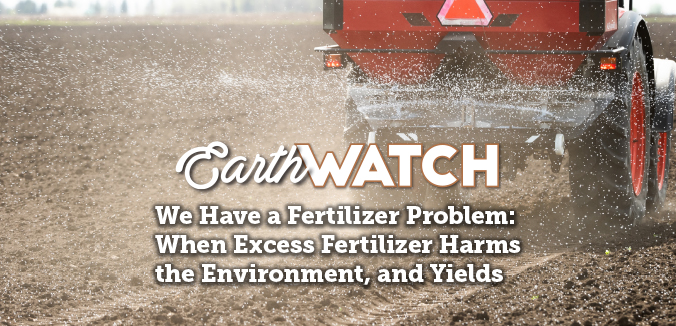
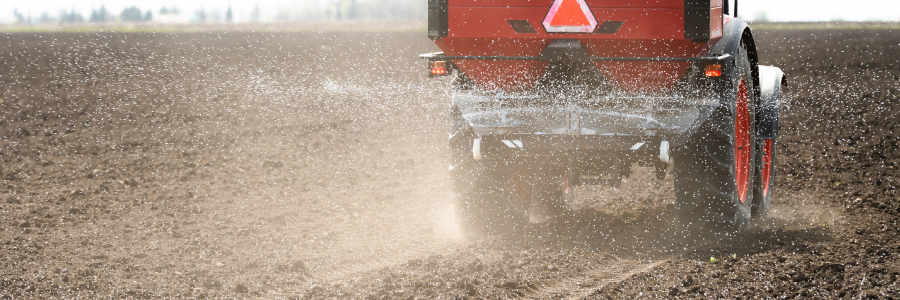
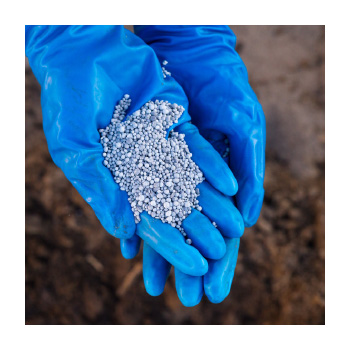
A 2021 European study published in Global Change Biology found that excess fertilizer application during a drought year can create a “boom-and-bust season” in grass crops, such as corn, wheat and oats, by increasing competition for an already limited resource—water.9 Plants grow larger with more fertilizer, requiring more water than smaller plants would, thus depleting soil moisture reserves more quickly.10 A U.S.-based 2020 study similarly found that biomass loss in temperate grasslands, where food crops like corn, wheat, and oats are typically grown, during drought was “exacerbated by fertilization.”11 The implications are especially relevant because grasses—including crops like corn and wheat and the pasture grasses that feed livestock—provide a substantial portion of the global food supply.12 As droughts and heat waves become more frequent and severe, the impact of fertilizer on the drought resilience of crops like corn, wheat, and oats is a critical question for food security.13
Despite its high ecological and economic costs, many U.S. farmers still perceive fertilizer reduction as a financial risk, experts say.14 One surprising influence driving excessive use is “formal fertilizer recommendations” from public universities, as The New Lede reported in 2023.15 While farmers believe the guidance is science-based, some prominent agronomists suggest the recommendations are “more like a big sports gambling wager,” relying on anticipated market prices, weather assumptions, farmers’ risk tolerance, and other considerations beyond what crops are likely to utilize.16 As a result, farmers are often advised to apply 50 percent or more nitrogen than is required for abundant crops.17 This guidance has also produced “a kind of research schizophrenia”: Iowa State University researchers, for example, found that 120 pounds of nitrogen per acre yielded almost 200 bushels of corn per acre (a result other land-grant universities have replicated).18 Yet the very same university recommends applying up to 240 pounds of nitrogen per acre to achieve a comparable yield.19
Soil scientists and the evidence agree: Soil health is “the best defense against drought there is,”20 yet conventional farms often rely on methods primarily focused on maximizing yields, including planting monocultures, using biodiversity-reducing pesticides and fertilizers, and leaving cropland bare after harvest.21 22 The result is soil depleted of essential nutrients, microbes, stability, and resilience.23 Practices that promote soil health are quite the opposite, including maintaining year-round living cover, planting diverse crop rotations, and minimizing soil disturbance.24 25 These practices help increase soil organic carbon, which can store up to 10 times its weight in water while feeding soil organisms, like earthworms, that build soil structure and drainage channels.26
Healthy soil, a foundational principle of organic farming practices, can also support yields comparable to those of conventional systems—without synthetic fertilizer.27 28 Rodale Institute’s Farming Systems Trial has been conducting side-by-side comparisons of conventional and organic crop systems since 1981,29 and they have shown that organic corn and soybean yields in the trial now match conventional yields, and during extreme weather, like drought, the organic plots produce an average of 30 percent higher yields.30
In its 2023 report, the Research Institute of Organic Agriculture says, “Food security is possible with less nitrogen,” but the solutions require buy-in—not just from industry, government, and agriculture but also from society.31
References
- The Fertilizer Institute. (2024, June 5). About us - the Fertilizer Institute. https://www.tfi.org/about-us/
- The Fertilizer Institute. (2025, September 2). Why join TFI - the Fertilizer Institute. https://www.tfi.org/membership/why-join-tfi/
- Research Institute of Organic Agriculture FiBL. (2023, November 2). Dispelling the nitrogen myth: less nitrogen-based fertilizers for more food security. https://www.fibl.org/en/info-centre/news/dispelling-the-nitrogen-myth
- Goswami, O., Tshabalala, P., & Union of Concerned Scientists. (2026). Less fertilizer, better outcomes: USDA conservation programs benefit both farmers and the planet. https://www.ucs.org/sites/default/files/2026-02/Less-Fertilizer-Better-…
- Goswami, O., Tshabalala, P., & Union of Concerned Scientists. (2026). Less fertilizer, better outcomes: USDA conservation programs benefit both farmers and the planet. https://www.ucs.org/sites/default/files/2026-02/Less-Fertilizer-Better-…
- Research Institute of Organic Agriculture FiBL. (2023, November 2). Dispelling the nitrogen myth: less nitrogen-based fertilizers for more food security. https://www.fibl.org/en/info-centre/news/dispelling-the-nitrogen-myth
- Tshabalala, P. (n.d.). The true cost of fertilizer hurts farmers—and the rest of us, too - Union of concerned scientists. https://blog.ucs.org/precious-tshabalala/the-true-cost-of-fertilizer-hu…
- Dzombak, R. (2021, July). Excess Fertilizer Causes a New Challenge: Low Crop Yields During Drought. Civil Eats. https://civileats.com/2021/07/21/excess-fertilizer-causes-a-new-challen…
- Dzombak, R. (2021, July). Excess Fertilizer Causes a New Challenge: Low Crop Yields During Drought. Civil Eats. https://civileats.com/2021/07/21/excess-fertilizer-causes-a-new-challen…
- Dzombak, R. (2021, July). Excess Fertilizer Causes a New Challenge: Low Crop Yields During Drought. Civil Eats. https://civileats.com/2021/07/21/excess-fertilizer-causes-a-new-challen…
- Dzombak, R. (2021, July). Excess Fertilizer Causes a New Challenge: Low Crop Yields During Drought. Civil Eats. https://civileats.com/2021/07/21/excess-fertilizer-causes-a-new-challen…
- Dzombak, R. (2021, July). Excess Fertilizer Causes a New Challenge: Low Crop Yields During Drought. Civil Eats. https://civileats.com/2021/07/21/excess-fertilizer-causes-a-new-challen…
- Dzombak, R. (2021, July). Excess Fertilizer Causes a New Challenge: Low Crop Yields During Drought. Civil Eats. https://civileats.com/2021/07/21/excess-fertilizer-causes-a-new-challen…
- Dzombak, R. (2021, July). Excess Fertilizer Causes a New Challenge: Low Crop Yields During Drought. Civil Eats. https://civileats.com/2021/07/21/excess-fertilizer-causes-a-new-challen…
- Schneider, K., Schneider, K., & Schneider, K. (2026, January 30). Advising farmers on fertilizer, universities add to water pollution woes. The New Lede. https://www.thenewlede.org/2023/08/in-advising-farmers-about-fertilizer…
- Schneider, K., Schneider, K., & Schneider, K. (2026, January 30). Advising farmers on fertilizer, universities add to water pollution woes. The New Lede. https://www.thenewlede.org/2023/08/in-advising-farmers-about-fertilizer…
- Schneider, K., Schneider, K., & Schneider, K. (2026, January 30). Advising farmers on fertilizer, universities add to water pollution woes. The New Lede. https://www.thenewlede.org/2023/08/in-advising-farmers-about-fertilizer…
- Schneider, K., Schneider, K., & Schneider, K. (2026, January 30). Advising farmers on fertilizer, universities add to water pollution woes. The New Lede. https://www.thenewlede.org/2023/08/in-advising-farmers-about-fertilizer…
- Schneider, K., Schneider, K., & Schneider, K. (2026, January 30). Advising farmers on fertilizer, universities add to water pollution woes. The New Lede. https://www.thenewlede.org/2023/08/in-advising-farmers-about-fertilizer…
- Dzombak, R. (2021, July). Excess Fertilizer Causes a New Challenge: Low Crop Yields During Drought. Civil Eats. https://civileats.com/2021/07/21/excess-fertilizer-causes-a-new-challen…
- Goswami, O., Tshabalala, P., & Union of Concerned Scientists. (2026). Less fertilizer, better outcomes: USDA conservation programs benefit both farmers and the planet. https://www.ucs.org/sites/default/files/2026-02/Less-Fertilizer-Better-…
- Dzombak, R. (2021, July). Excess Fertilizer Causes a New Challenge: Low Crop Yields During Drought. Civil Eats. https://civileats.com/2021/07/21/excess-fertilizer-causes-a-new-challen…
- Goswami, O., Tshabalala, P., & Union of Concerned Scientists. (2026). Less fertilizer, better outcomes: USDA conservation programs benefit both farmers and the planet. https://www.ucs.org/sites/default/files/2026-02/Less-Fertilizer-Better-…
- Soil Health Institute. (2025, August 29). How does soil health increase resilience to drought and extreme rainfall? - Soil Health Institute. Soil Health Institute - Enriching Soil, Enhancing Life. https://soilhealthinstitute.org/news-events/how-does-soil-health-increa…
- Dzombak, R. (2021, July). Excess Fertilizer Causes a New Challenge: Low Crop Yields During Drought. Civil Eats. https://civileats.com/2021/07/21/excess-fertilizer-causes-a-new-challen…
- Soil Health Institute. (2025, August 29). How does soil health increase resilience to drought and extreme rainfall? - Soil Health Institute. Soil Health Institute - Enriching Soil, Enhancing Life. https://soilhealthinstitute.org/news-events/how-does-soil-health-increa…
- Rodale Institute. (2018b, December 3). Organic vs Conventional - Rodale Institute. https://rodaleinstitute.org/why-organic/organic-basics/organic-vs-conve…
- Rodale Institute. (2020, October 29). Regenerative Organic Agriculture - Rodale Institute. https://rodaleinstitute.org/why-organic/organic-basics/regenerative-org…
- Rodale Institute. (2025d, September 25). Farming Systems Trial - Rodale Institute. https://rodaleinstitute.org/science/farming-systems-trial/
- Rodale Institute. (2025d, September 25). Farming Systems Trial - Rodale Institute. https://rodaleinstitute.org/science/farming-systems-trial/
- Research Institute of Organic Agriculture FiBL. (2023, November 2). Dispelling the nitrogen myth: less nitrogen-based fertilizers for more food security. https://www.fibl.org/en/info-centre/news/dispelling-the-nitrogen-myth
 Preferred Store:
 My Account Sign-In