 Preferred Store:
 My Account Sign-In








Sign-up for {N}power to get exclusive discounts, newsletters, members-only features, and more!
Aging is a fact of life. Aging with cognitive decline doesn’t have to be. It’s true that genetics can play a role in cognitive decline, memory loss, and conditions such as Alzheimer’s disease,1 but what’s becoming increasingly clear is the role that nutrition—particularly the balance of omega-3 to omega-6 fatty acids we consume—plays in how well, or unwell, our brains age. By increasing our intake of omega-3s and decreasing dietary omega-6s, which are consumed in excess in our modern diet, we can prioritize brain health now to preserve it well into the future.

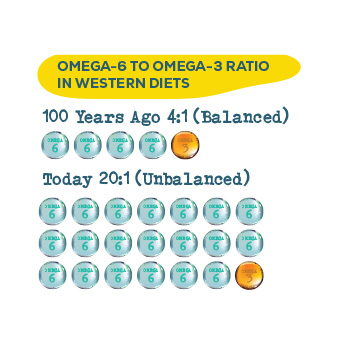
We’ve made a lot of advances over the last 100 years, but our omega-6 to omega-3 ratio isn’t one of them; in fact, 100 years ago, we were actually better off in terms of our omega-6:3 ratio. That’s because back then, humans consumed omega-6s and omega-3s at around a 4:1 ratio, fast forward to today, and the typical Western diet is now providing a 20:1 ratio in favor of omega-6s.2 For some perspective, in 1909, soybean oil (a major source of omega-6s) provided 0.006 percent of calories in the average American diet, but by 1999, soybean oil contributed to more than 7 percent of total calories—this represents a 1,000-fold increase in consumption.3
Both omega-3 and omega-6 fatty acids are considered essential polyunsaturated fats (PUFAs), which means the body cannot produce them and they must come from the diet. Omega-6s are not inherently bad—they support normal growth and a healthy immune response—but it’s the overconsumption of refined omega-6s, coupled with a lack of adequate intake of eicosapentaenoic acid (EPA) and docosahexaenoic acid (DHA) from omega-3s that makes them “highly associated with the pathogenesis of many modern diet-related chronic diseases.”4 5 This can be combated by reducing the omega-6:3 ratio.6
Think of it this way, as one study puts it, “Omega-3s are utilized by the body to resolve and lower inflammation, whereas omega-6 polyunsaturated fatty acids are primarily used for increasing inflammation.”7 Bottom line: this imbalance is accelerating brain aging and disease right before our eyes. But there’s something we can do about it.
The omega-3 fats are essential for a healthy brain. Period. Healthy neurons contain high amounts of DHA, which keeps these cells flexible and fluid, allowing for information to easily flow from one cell to another—and the better information flows, the better our mood, memory, concentration, and learning are. Both EPA and DHA support neurogenesis, reduce oxidative damage and inflammation in the brain, and DHA has been shown to increase brain-derived neurotrophic factor (BDNF), a protein that plays a critical role in brain plasticity, increasing the growth of new neurons and synapses.8 9 10 11 The omega-3s have also been linked to larger brain sizes. Researchers at the University of South Dakota analyzed blood levels of the omega-3s EPA and DHA in 1,111 women whose average age was 78 years. The researchers took brain scans to determine the size of the women’s brains. When the researchers followed up eight years later, they found that women with the highest blood levels of both EPA and DHA had the largest brain sizes. The size of the women’s hippocampus, which is involved in memory, was substantially larger compared with women who had low levels of EPA and DHA.12
Omega-3s Linked to larger brain size & better memory
Another year-long, placebo-controlled study found that a daily supplement containing 430 mg of DHA and 150 mg of EPA significantly improved short-term and working memory (important for reasoning and decision making) and verbal memory in elderly subjects with mild cognitive impairment.13 The omega-3s have been found to exhibit a neuroprotective effect, and supplementation has been shown to improve cognitive function.14 15 16 17
Higher DHA = 47% lower risk of dementia18
Several studies have also investigated the association between omega-3 levels and risk of dementia and cognitive decline. One study observed that participants with higher DHA levels showed a 47 percent risk reduction of developing dementia.18 Another study conducted on 1,575 dementia-free participants found that lower levels of DHA were associated with worse memory and executive function performance.19 What’s more, an omega-3 deficiency has been linked to reduced brain glucose uptake and, in turn, higher memory impairment.20 21
Now that you know how important the omega-3s DHA and EPA are for healthy brain aging, you can focus on reducing excess omega-6 intake. Some of the most common sources of omega-6s include vegetable seed oils, such as corn, soybean, safflower, sunflower, and cottonseed; fried and processed foods made with them, such as packaged crackers, chips, and other snacks; fast food and ready-to-eat meals; and conventional salad dressings, mayonnaise, and other condiments.
Instead of cooking with vegetable oils high in omega-6s, opt for extra virgin olive oil, coconut oil, high-oleic sunflower or safflower oil, or butter from grass-fed cows. Shop for whole, unprocessed foods like organic vegetables and fruits, legumes, nuts and seeds, and whole grains instead of ultra-processed products. Choose milk, meat, and eggs that prioritize the health of the animal, as they also have better omega-3 profiles—milk and meat from 100% grass-fed cows are fantastic sources of dietary omega-3s.22 Finally, aim to eat two to three servings of fatty fish weekly, such as wild-caught salmon (one of the highest sources), anchovies, mackerel, or herring.
And finally, optimize your omega-3 intake with a fish oil or algal oil supplement that combines EPA and DHA. And just how much for optimal brain health? Research indicates that 2,000 mg/daily of combined EPA and DHA is effective for supporting healthy brain function.23
- Balance omega 6:omega 3
- Eat fatty fish regularly
- Supplement with EPA+DHA
- Swap cooking oils
- Prioritize whole foods
Healthy brain aging is not about leaving it up to genetics. It’s about improving and preserving your quality of life for the long term with the right ratio of omega-6s to omega-3s, through diet and supplementation. Reverse the modern-day dietary pitfalls and provide your brain with the support it needs now, and well into the future.
Sign-up for {N}power to get exclusive discounts, newsletters, members-only features, and more!