 Preferred Store:
 My Account Sign-In





Sign-up for {N}power to get exclusive discounts, newsletters, members-only features, and more!
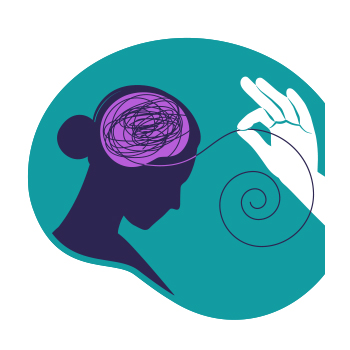
We are a nation riddled with anxiety. Whether you suffer from generalized anxiety disorder (hi, it’s me!), social anxiety (me again), obsessive-compulsive disorder, panic disorder, or post-traumatic stress disorder (or a combination of any of the above), you are not alone. Anxiety disorders are the most common mental health condition in the U.S., affecting 40 million adults, or close to 20 percent of the population.1 Anxiety is also the most common mental health issue among children and adolescents2 and women are twice as likely as men to develop an anxiety disorder in their lifetime.3

Even if you don’t have a diagnosable anxiety disorder, it’s likely you sometimes feel anxious. The American Psychiatric Association’s 2025 annual mental health poll revealed that among the 2,204 adults surveyed, 67% were anxious about current world events; 61% were anxious about paying bills; and 53% were anxious about the impacts of climate change.4
The physical and mental symptoms of anxiety can be overwhelming, but they can be controlled. While there are many root causes of anxiety, and severe anxiety disorders typically require medical treatment, many symptoms can be controlled with an integrative approach. Healthy lifestyle changes combined with extra nutritional support make managing symptoms so much easier, creating the space you need to cultivate calm.
One of the most important things to do if you suffer from anxiety is to take stock in your lifestyle habits. How is your diet? What about sleep? Do you make regular movement a priority? Do you consciously work to reduce the stressors you can?
Back to the American Psychiatric Association’s mental health poll: When the respondents were asked to choose two factors they thought had the largest impact on their mental health, the two most common choices were stress and sleep.5 So, start there. What steps are you actively taking to reduce stress levels, because stress significantly worsens and can even trigger anxiety. Find something that helps you decompress and find calm—personally, a daily walk and weekly sauna sessions help quiet my mind and calm my body, but it could be mind-body practices like yoga or tai chi, meditation or journaling, losing yourself in a book, listening to music or playing an instrument, a long run, or a fierce workout at the gym. The important thing is to find something you enjoy so you’ll stick with it, because consistency is key. As for sleep, commit yourself to prioritizing sleep and good sleep hygiene (no screen time before bed, a cool, dark bedroom, white noise machine, sticking to the same bedtime every night, restricting alcohol consumption, etc.).

A significant number of people with mood disorders like anxiety have also been shown to have elevated levels of inflammation in their bodies.6 Some of the same lifestyle strategies that reduce stress also reduce inflammation—regular physical activity;7 8 yoga, tai chi, sauna, meditation;9 10 and good sleep hygiene that promotes quality sleep.11 12 Changes to your diet, specifically replacing pro-inflammatory ultra-processed foods with anti-inflammatory foods,13 14 and dietary supplements, such as curcumin and the omega-3 fats, will further reduce inflammation.15 16 Speaking of ultra-processed foods… these “foods,” which are deficient in vitamins and minerals and all too prevalent in our diets, leave us undernourished and mentally unbalanced. We are unknowingly plagued with sub-optimal levels (in some cases, outright deficiencies) of essential vitamins and minerals, some of which play crucial roles in mental health. The following are some of the most important micronutrients to optimize if you are suffering from anxiety.
Known as a calming mineral, much of the population consumes inadequate amounts of magnesium. Mental and emotional stress quickly depletes levels, as do poor eating habits, alcohol consumption, and certain prescription drugs. Sometimes called the original “chill pill,” magnesium plays important roles in the nervous system, including modulating the hypothalamic-pituitary-adrenal (HPA) axis (our central stress response system) and blocking excitatory transmission in brain cells, both of which help prevent feelings of anxiety. Research has shown that increasing magnesium levels results in anti-anxiety effects and can relieve mild to moderate anxiety and anxiety associated with PMS, especially when combined with vitamin B6.17 Studies have used 250-300 mg of magnesium along with 50 mg of vitamin B6 daily with efficacy.
Speaking of B vitamins, it’s a good idea to take a quality B-complex as a foundational supplement. The B-family works synergistically and is vital for mental and emotional wellbeing; the B vitamins are involved in healthy neurotransmitter production, a healthy stress response, and are necessary for normal central nervous system function.18 19 Stress, sugar, and alcohol all quickly deplete levels of the B vitamins, and because they are water soluble, they are not stored in the body and must be replenished daily. A quality B-complex supplement will contain all of the essential B vitamins—look for folic acid as 5-methyltetrahydrofolic acid; B12 as methylcobalamin; and B6 as pyridoxal 5-phosphate, as these are the forms the body most easily absorbs and uses.
The omega-3 fats docosahexaenoic acid (DHA) and eicosapentaenoic acid (EPA) are essential for healthy neurological function. And like magnesium, many of us are woefully low in these important fats, and instead consume an overabundance of pro-inflammatory omega-6s. Clinical research has shown that subjects diagnosed with anxiety have significantly lower levels of EPA and DHA and a higher ratio of omega-6s to omega-3s in the brain, and at least one trial has shown a correlation between low levels of EPA and severity of PTSD.20 An analysis of 19 clinical trials examined the anti-anxiety effects of EPA and DHA in patients with significant anxiety and fear-related symptoms. Researchers found that taking between 1,000 and 2,000 mg of combined EPA and DHA daily was associated with an improvement in anxiety symptoms, with the strongest effect seen in patients with specific clinical diagnoses.21
With more information emerging on the gut-brain axis, researchers have begun to delve into the connection between gut health and mental health, with exciting findings. For example, a healthy balance of Bifidobacterium and Lactobacillus species in the gut is important for producing the brain’s main calming neurotransmitter gamma-aminobutyric acid (GABA); low levels of GABA have been linked to anxiety. Research has also found that probiotics normalize cortisol levels, regulate the HPA axis (hyperactivity or dysregulation of the HPA axis is a strong marker of anxiety), and reduce systemic pro-inflammatory cytokines, which have been found to play a role in the development of anxiety.22 Many people have an unhealthy balance of bacteria in their guts, or dysbiosis; restoring a healthy balance is especially crucial for those with anxiety.
N-acetylcysteine, or NAC, is well-known for supporting lung and liver health, but research is discovering that it can play an important role in mental health too, specifically by reducing neuroinflammation and oxidative stress in the brain, strengthening communication among brain cells, and promoting the growth of new brain cells, generally improving overall brain health and plasticity, or the brain’s ability to change and grow.23 This is especially important in creating new neuronal pathways to “re-train” your brain. “On a clinical level, in day-to-day work with patients, NAC seems to help with ruminations, with difficult-to-control extreme negative self-thoughts. Such thoughts are common in depression and anxiety disorders, and also in eating disorders, schizophrenia, OCD, etc. I’ve seen it help patients with such disorders when many other things, medicines or psychotherapies, have not helped much,” says David Hellerstein, MD, a professor of clinical psychiatry at Columbia University.24 Doses for mental health concerns range from 1,200 to 3,000 mg/daily.25
Anxiety is a normal human emotion, but one that should pass. When you begin to feel like it has a grip on your life, it’s time to address it. Consider taking a holistic approach that integrates lifestyle, nutrition, and supplemental support that will help you cultivate calm.
Long-term support is vital, but when you feel yourself on the edge and need something to restore calm quickly, consider some of these “in-the-moment” remedies:
Sign-up for {N}power to get exclusive discounts, newsletters, members-only features, and more!