 Preferred Store:
 My Account Sign-In






Sign-up for {N}power to get exclusive discounts, newsletters, members-only features, and more!
Evidence is mounting for the cognitive and mood-boosting effects of lion’s mane mushroom supplements, but studies in young, healthy adults are limited. A recent study1 aimed to change that by analyzing the short and long-term effects of lion’s mane supplements in 43 young and healthy adults. The participants, aged 18-45, were randomized into two groups and given a placebo or 1.8 grams of a lion’s mane mushroom extract for 28 days.

To assess the short-term effects of the lion’s mane extract, the participants were given several cognitive function tests at the start of the study and then given the treatment (either the lion’s mane extract or placebo) immediately following. After a 60-minute absorption period, they were given another cognitive function test to compare the results. While there were no significant benefits for two of the three tests, the researchers found participants taking the lion’s mane extract performed significantly faster on the test measuring executive function (things like working memory, attention, organization, and planning).
Long-term effects of taking the lion’s mane extract were examined by comparing a stress assessment at the start of the study to one taken after the full 28-day treatment period. The researchers found participants taking the lion’s mane extract had significantly lower stress scores by the end of the study. The researchers conclude that the cognitive and mood-enhancing effects of lion’s mane may be due to its effect on neuronal plasticity (promoting brain cell growth and connectivity) as well as its anti-inflammatory effects.
NAC and vitamin D each have well-known immune health benefits, but new research suggests they may work even better together. A 2025 study published in Frontiers in Immunology2 found that adults over 65 with vitamin D deficiency who took both supplements showed signs of slower immune cell aging compared to those taking vitamin D alone.
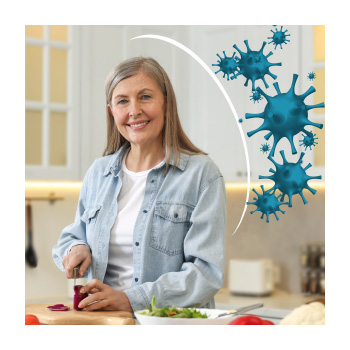
As we age, immune cells decline in function and we cannot clear out old or damaged cells as efficiently. These worn-out cells then build up and release inflammatory signals, driving chronic, low-level inflammation that further weakens immune defenses. Aging also impacts the body’s ability to produce vitamin D—an essential nutrient for proper immune function. About 65 percent of Americans have suboptimal levels3 and older adults are particularly at risk.4
To test the effects of daily supplementation of vitamin D, NAC, or the two combined, researchers divided participants into four groups for the eight-week study: low-dose vitamin D (1,000 IU), low-dose vitamin D plus NAC (600mg), high-dose vitamin D (5,000 IU), and high-dose vitamin D plus NAC (600mg). Participants’ white blood cells were analyzed for markers of immune cell aging and inflammation at the beginning and end of the study. The results showed that while both high-dose vitamin D groups had significant reductions in markers of cellular aging and inflammation compared to the low-dose group, adding NAC enhanced these beneficial effects.
Why the synergy? Researchers point to a potential health-promoting loop: NAC boosts the body’s production of glutathione, a master antioxidant that helps vitamin D work more efficiently. In turn, vitamin D helps sustain glutathione levels. This mutual support may help keep the immune system balanced and resilient by improving both vitamin D metabolism and antioxidant protection.
Sign-up for {N}power to get exclusive discounts, newsletters, members-only features, and more!