Vitamin E & Jojoba: Power Duo for Skin Health

According to recent data, the U.S. skincare products market generated nearly $25 billion in 2025 and is expected to grow around three percent  annually.1 The numbers don’t lie—healthy, glowing skin is in. But while many people focus on expensive creams, serums, facials, and complicated routines, skin health often comes down to ingredient quality. This is where topical nutrients like vitamin E and jojoba oil stand out. They are the understated skin health heroes, supporting skin hydration, protecting against environmental onslaughts, and promoting skin resilience.
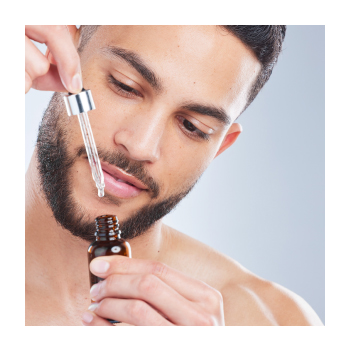
A person using a dropper into a bottle

A One-Two Punch for Healthy Skin

Skin health depends on a few key components: lipids, antioxidant protection, and a healthy skin barrier.2 3 Vitamin E and jojoba oil work in different—but complementary—ways to strengthen the skin. Vitamin E acts as a defender, neutralizing oxidative stress inside the skin’s lipid (fatty) environment. Jojoba oil, on the other hand, promotes healthy lipid balance and skin barrier health, and because it closely resembles human sebum, it is easily absorbed.4 5 This compatibility with the skin’s natural lipids is what makes jojoba oil especially useful in everyday skincare. It doesn’t overwhelm the skin or disrupt its balance, which is why it’s often well tolerated across a wide range of skin types, including sensitive and combination skin.6

Your Skin Barrier Function + Hydration Dream Team

The outermost layer of the skin, the stratum corneum, acts as the main barrier against trans-epidermal water loss (TEWL) and environmental irritants. When that barrier is compromised, moisture escapes more easily, leading to dryness and irritation. 7 Vitamin E is naturally present in the skin but becomes depleted with exposure to UV light and pollution.8 Replenishing skin vitamin E levels topically can help stabilize lipids, reinforce barrier function, and reduce TEWL. 9 Research has found that topical use of vitamin E, used between two and four weeks, increases stratum corneum hydration and water retention .10 11 Jojoba oil has the unique ability to integrate into the skin’s surface without overwhelming it—it supports the skin barrier without sitting heavily on top.12 13 Its properties also make it a suitable carrier oil, improving vitamin E retention and stability.14
Your Best Defense Against Environmental Stress

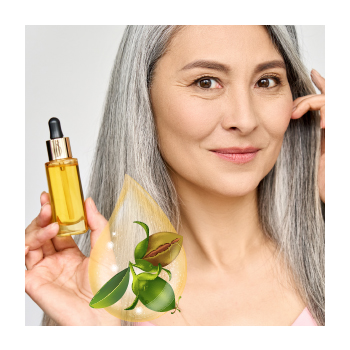
A person holding a bottle

Skin is constantly exposed to stressors like UV radiation, pollution, and other sources of oxidative damage. Over time, these contribute to premature aging and weakened skin barrier function.15 16 Vitamin E is one of the better-studied lipid-soluble antioxidants and has been shown to help reduce oxidative stress in the skin and improve its resilience to environmental exposure.17 18A 2026 clinical dermatology review concluded that vitamin E enhances the skin’s defenses against pollutants and everyday environmental stress.19 Jojoba oil contributes more subtly—it provides small amounts of antioxidant compounds, including tocopherols and phenolic compounds, and offers mild anti-inflammatory and antimicrobial benefits that support overall skin health.20

Crack the Code on Aging Skin

Skin aging is influenced by both biological processes and environmental factors. Oxidative stress is a major driver of collagen degradation, elastin breakdown, and the formation of fine lines and wrinkles.21 On the flip side, antioxidants, like vitamin E, help counteract this process by reducing oxidative damage in the skin.22 Topical formulations and creams containing vitamin E at concentrations of approximately 0.5% to 1%, have been shown to help protect against environmental stressors, fostering skin recovery and resilience. Oral supplementation in the range of 200-400 IU per day has also been studied for its systemic antioxidant effects on skin health.23

Jojoba oil complements these effects through its emollient and barrier-repair properties. It helps reinforce the skin’s lipid matrix, improving moisture retention and reducing TEWL. This leads to smoother, more supple skin and helps minimize the appearance of fine lines that are exacerbated by dryness and barrier weakening. In addition, jojoba oil contains naturally occurring tocopherols (vitamin E–like compounds) that contribute to its antioxidant activity, further enhancing protection against environmental stressors like UV radiation, air pollution, and climate-related extremes (dry or humid conditions).24 

Of note, jojoba oil is particularly great for sensitive and acne-prone skin due to its non-comedogenic (non-pore-clogging) and hypoallergenic properties. It helps regulate oil balance, reducing the likelihood of breakouts. Jojoba also has antimicrobial and wound-healing effects, including the ability to accelerate tissue repair.25 

Better Together: How They Work in Tandem 

A person using a towel to dry their face

For topical ingredients to work well, they need to remain stable and absorb effectively into the skin. Because vitamin E is fat-soluble, it benefits from being paired with a compatible carrier.

Jojoba oil is that team player. It helps distribute vitamin E evenly and facilitates absorption without disrupting the skin barrier. A 2023 study showed that jojoba oil can significantly improve the delivery of active compounds when put on the skin, highlighting its role as a carrier ingredient.26

While vitamin E and jojoba oil aren’t flashy ingredients backed by big marketing campaigns, they offer something more concrete—they consistently support skin health in simple, effective ways. They are a true power duo for skin health.

References


  1. The United States Skin Care Products Market Size & Outlook, 2033. (2026, April 9). https://www.grandviewresearch.com/horizon/outlook/skin-care-products-ma…
  2. Anna Nicolaou, Alexandra C. Kendall, Bioactive lipids in the skin barrier mediate its functionality in health and disease, Pharmacology & Therapeutics, https://doi.org/10.1016/j.pharmthera.2024.108681 (https://www.sciencedirect.com/science/article/pii/S0163725824001013)
  3. Berdyshev E. Skin Lipid Barrier: Structure, Function and Metabolism. Allergy Asthma Immunol Res. 2024 Sep;16(5):445-461. doi: 10.4168/aair.2024.16.5.445. PMID: 39363765; PMCID: PMC11450438.
  4. De Oliveira Pinto, C. a. S., Martins, T. E. A., Martinez, R. M., Freire, T. B., Velasco, M. V. R., & Baby, A. R. (2021). Vitamin E in human skin: Functionality and topical products. In Biochemistry. https://doi.org/10.5772/intechopen.98336
  5. Abdalla S, Aroua MK, Gew LT. A Comprehensive Review of Plant-Based Cosmetic Oils (Virgin Coconut Oil, Olive Oil, Argan Oil, and Jojoba Oil): Chemical and Biological Properties and Their Cosmeceutical Applications. ACS Omega. 2024 Oct 25;9(44):44019-44032. doi: 10.1021/acsomega.4c04277. PMID: 39524627; PMCID: PMC11541506.
  6. Gad HA, Roberts A, Hamzi SH, Gad HA, Touiss I, Altyar AE, Kensara OA, Ashour ML. Jojoba Oil: An Updated Comprehensive Review on Chemistry, Pharmaceutical Uses, and Toxicity. Polymers (Basel). 2021 May 24;13(11):1711. doi: 10.3390/polym13111711. PMID: 34073772; PMCID: PMC8197201.
  7. Bouwstra JA, Nădăban A, Bras W, McCabe C, Bunge A, Gooris GS. The skin barrier: An extraordinary interface with an exceptional lipid organization. Prog Lipid Res. 2023 Nov;92:101252. doi: 10.1016/j.plipres.2023.101252. Epub 2023 Sep 4. PMID: 37666282; PMCID: PMC10841493.
  8. Thiele JJ, Hsieh SN, Ekanayake-Mudiyanselage S. Vitamin E: critical review of its current use in cosmetic and clinical dermatology. Dermatol Surg. 2005 Jul;31(7 Pt 2):805-13; discussion 813. doi: 10.1111/j.1524-4725.2005.31724. PMID: 16029671.
  9. Nada A, Zaghloul A, Hedaya M, Khattab I. Stability of vitamin E and vitamin E acetate containing cosmetic preparations. J Glob Pharma Technol. 2012;4(03):1-8
  10. Gehring W, Fluhr J, Gloor M. Influence of vitamin E acetate on stratum corneum hydration. Arzneimittelforschung. 1998;48:772-775
  11. Gönüllü Ü, Sensoy D, Üner M, Yener G, Altinkurt T. Comparing the moisturizing effects of ascorbic acid and calcium ascorbate against that of tocopherol in emulsions. J Cosmet Sci. 2006;57(6):465-473
  12. Abdalla S, Aroua MK, Gew LT. A Comprehensive Review of Plant-Based Cosmetic Oils (Virgin Coconut Oil, Olive Oil, Argan Oil, and Jojoba Oil): Chemical and Biological Properties and Their Cosmeceutical Applications. ACS Omega. 2024 Oct 25;9(44):44019-44032. doi: 10.1021/acsomega.4c04277. PMID: 39524627; PMCID: PMC11541506.
  13. Gad HA, Roberts A, Hamzi SH, Gad HA, Touiss I, Altyar AE, Kensara OA, Ashour ML. Jojoba Oil: An Updated Comprehensive Review on Chemistry, Pharmaceutical Uses, and Toxicity. Polymers (Basel). 2021 May 24;13(11):1711. doi: 10.3390/polym13111711. PMID: 34073772; PMCID: PMC8197201.
  14. Vitamin E and skin health | Linus Pauling Institute. (2026, January 2). Linus Pauling Institute. https://lpi.oregonstate.edu/mic/health-disease/skin-health/vitamin-E?
  15. Konisky H, Bowe WP, Yang P, Kobets K. A clinical evaluation of the efficacy and tolerability of a novel topical antioxidant formulation featuring vitamin C, astaxanthin, and fermented turmeric. J Cosmet Dermatol. 2023;22:3088-3094. doi:10.1111/jocd.15967
  16. Turcov, D., Zbranca-Toporas, A., & Suteu, D. (2023). Bioactive Compounds for Combating Oxidative Stress in Dermatology. International Journal of Molecular Sciences24(24), 17517. https://doi.org/10.3390/ijms242417517
  17. Ramos-E-Silva M, Camargo C, Cavalcante R, Carneiro S. Vitamin E in dermatology. Clin Dermatol. 2026 Mar-Apr;44(2):257-263. doi: 10.1016/j.clindermatol.2026.02.009. Epub 2026 Feb 13. PMID: 41690654.
  18. Abadie, Mohammed & Mahfoudh, Marwah & Al-Rawi, Al-Hussein. (2024). Topical Vitamin E in Modern Skin Therapy: A Comprehensive Review. International Journal of Clinical & Experimental Dermatology. 9. 01-08. 10.33140/IJCED.09.02.09.
  19. Ramos-E-Silva M, Camargo C, Cavalcante R, Carneiro S. Vitamin E in dermatology. Clin Dermatol. 2026 Mar-Apr;44(2):257-263. doi: 10.1016/j.clindermatol.2026.02.009. Epub 2026 Feb 13. PMID: 41690654.
  20. Chakrabarty S, Jigdrel K, Mukherjee P, Paul T, Drakpa D, Gupta J. Bioactivities of Jojoba Oil Beyond Skincare. J Med Food. 2024 Jul;27(7):579-588. doi: 10.1089/jmf.2023.k.0062. Epub 2024 May 2. PMID: 38695844.
  21. Shin JW, Kwon SH, Choi JY, Na JI, Huh CH, Choi HR, Park KC. Molecular Mechanisms of Dermal Aging and Antiaging Approaches. Int J Mol Sci. 2019 Apr 29;20(9):2126. doi: 10.3390/ijms20092126. PMID: 31036793; PMCID: PMC6540032.
  22. Kumar V, Tanwar N, Goel M, Khan M, Kumar D, Singh G, Mundlia J, Khatri N, Kumar A. Antioxidants for Skin Health. Recent Adv Food Nutr Agric. 2025;16(3):250-265. doi: 10.2174/012772574X311177240710100118. PMID: 39108105.
  23. Keen MA, Hassan I. Vitamin E in dermatology. Indian Dermatol Online J. 2016 Jul-Aug;7(4):311-5. doi: 10.4103/2229-5178.185494. PMID: 27559512; PMCID: PMC4976416.
  24. Gad, H. A., Roberts, A., Hamzi, S. H., Gad, H. A., Touiss, I., Altyar, A. E., Kensara, O. A., & Ashour, M. L. (2021). Jojoba Oil: An Updated Comprehensive Review on Chemistry, Pharmaceutical Uses, and Toxicity. Polymers13(11), 1711. https://doi.org/10.3390/polym13111711
  25. Abdalla S, Aroua MK, Gew LT. A Comprehensive Review of Plant-Based Cosmetic Oils (Virgin Coconut Oil, Olive Oil, Argan Oil, and Jojoba Oil): Chemical and Biological Properties and Their Cosmeceutical Applications. ACS Omega. 2024 Oct 25;9(44):44019-44032. doi: 10.1021/acsomega.4c04277. PMID: 39524627; PMCID: PMC11541506.
  26. Gruber JV, Terpak N, Massard S, Schwartz A, Bojanowski K. Passive Enhancement of Retinol Skin Penetration by Jojoba Oil Measured Using the Skin Parallel Artificial Membrane Permeation Assay (Skin-PAMPA): A Pilot Study. Clin Cosmet Investig Dermatol. 2023 Feb 2;16:317-324. doi: 10.2147/CCID.S391667. PMID: 36756221; PMCID: PMC9901458.