 Preferred Store:
 My Account Sign-In








Sign-up for {N}power to get exclusive discounts, newsletters, members-only features, and more!
Long before those first cries are heard, a healthy pregnancy begins with essential nutrients—they are the building blocks of life for both mother and baby. Among them, the omega-3 fats EPA and DHA play a central role in neurodevelopment, pregnancy duration, and maternal mental health.1 2 3 Research continues to underscore the importance of omega-3 intake during pregnancy and postpartum, especially when paired with choline, which increases the brain’s uptake and absorption of DHA.4 These nutrients are vital for mother and baby—the most important duo of all.

One of the most consistently supported benefits of omega-3 supplementation in pregnancy is its association with reduced risk of preterm birth. A comprehensive Cochrane review—which included a high-quality systematic review of 70 randomized controlled trials—concluded that omega-3 fatty acid supplementation during pregnancy reduces the risk of early preterm birth (before 34 weeks) and preterm birth overall (before 37 weeks). Omega-3s help regulate inflammation and hormone-like substances, such as prostaglandin, which influence uterine contractions and the timing of labor.5
A meta-analysis of 59 randomized controlled trials from 1990 to 2020, involving omega-3 supplementation at least twice a week during pregnancy, versus control groups with no supplementation, showed that omega-3s taken during pregnancy can prevent preeclampsia, increase gestational duration and birth weight, and decrease the risk of low birth weight and preterm birth.6
Globally, preterm birth (delivery before 37 weeks) remains one of the leading causes of death in children under age five, and preterm babies often face lifelong health challenges, making preventive strategies a public health priority.7 According to clinical guidance, women of childbearing age should consume at least 250 mg/day of EPA + DHA, and during pregnancy should receive an additional 100-200 mg/day of DHA to help reduce the risk of preterm and early preterm birth. The guidance also says that pregnant women with low DHA levels should increase those amounts to 600-1,000 mg/day of DHA + EPA. This guidance is based on data from numerous clinical trials, showing that at this dosage there was a significant reduction of preterm births early preterm births.8 It is important to note that most women do not meet the daily intake requirements of omega-3 fats, with research showing that more than 95 percent of childbearing-aged women do not meet the recommended 250mg/day. Similar results were observed in pregnant women.9
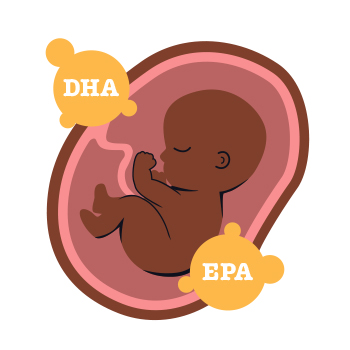
DHA in particular plays a fundamental role in the developing brain, affecting neuronal growth, synapse formation, and visual development. It is a structural component of brain cells and accumulates rapidly in the fetal brain during the third trimester. Because the fetus relies entirely on maternal DHA supplied through the placenta, maternal intake directly shapes fetal DHA levels.10 A 2026 meta-analysis assessed the effects of prenatal omega-3 supplementation on cognitive outcomes in the offspring and found that maternal intake of omega-3 fats during pregnancy was associated with improved child neurodevelopmental outcomes, including memory retention and markers of neuronal growth, indicating enhanced brain development. Researchers summarized that, “Maternal omega-3 supplementation appears as a safe and effective means to improve offspring neurodevelopment, with stronger effects under adverse gestational conditions [e.g., preeclampsia or gestational diabetes], highlighting its potential for at-risk populations.” 11
In an earlier study examining prenatal DHA supplementation and its long-term brain benefits on offspring, pregnant women were assigned to take either 600 mg of DHA or a placebo daily, starting in the second trimester through delivery. Their offspring were then followed for approximately five years to determine the effect DHA supplementation had on the children’s behavior and brain function. The children whose mothers took the DHA during pregnancy showed differences in brain activity, particularly in the area of visual processing/attention and memory, and improved self-control during thinking tasks, suggesting long-lasting cognitive benefits.12

Omega-3 fatty acids are not only important for the developing fetus, but also for maternal health during and after pregnancy. Pregnancy depletes maternal DHA stores, as the nutrient is preferentially transferred to the fetus to meet developmental demands—research shows that maternal DHA levels decline as gestation progresses.13 Without adequate intake, maternal levels decline significantly, potentially affecting mood and inflammatory regulation.14 According to one study, maternal DHA status declines from pregnancy through the first postpartum months, with the lowest levels found around six months after birth, due to both in-utero transfer and the demands of lactation. This study highlights the significant nutrient demands placed on the mother across both pregnancy and early lactation.15
Research also links low omega‑3 status to a higher risk of perinatal—including both prenatal and postpartum—depression. According to a 2025 review, perinatal depression affects about 21 percent of women during pregnancy and 15 percent after childbirth. The research shows that lower omega‑3 fatty acid levels are associated with up to a six‑fold greater risk of depression during pregnancy, and that omega‑3 supplementation appears beneficial for prevention.16 In addition, omega-3 supplementation has been shown to significantly improve presenting depressive symptoms in pregnant and postpartum women.17 Many clinical studies have used combined EPA and DHA amounts in the range of approximately 1-2 grams/daily, with higher EPA fractions linked to larger mood effects.18 While omega-3s are not a standalone treatment for perinatal depression, daily intake is a supportive strategy to support good maternal mental health.
Choline is an essential nutrient in pregnancy that supports healthy cell membranes and fetal brain development.19 Prenatal choline supplementation also increases DHA bioavailability, helping package and transport DHA more effectively.20 Higher maternal choline intake has been linked with a lower likelihood of adverse pregnancy outcomes,21 and because many prenatal vitamins contain little or no choline, dietary intake from foods like eggs or supplementation is especially important. The National Academy of Medicine recommends 450 mg/day during pregnancy and 550 mg/day during lactation.22
From the earliest weeks of pregnancy to the months after delivery, nutrition shapes the story of mother and child. Omega-3s help build the brain, support maternal wellbeing, and can even influence the timing of birth itself. From bump to baby and beyond, these nutrients do more than just nourish—they help lay the foundation for a healthier beginning and a lifetime of wellness.
Sign-up for {N}power to get exclusive discounts, newsletters, members-only features, and more!