 Preferred Store:
 My Account Sign-In






Sign-up for {N}power to get exclusive discounts, newsletters, members-only features, and more!
According to a study published in August 2025,1 a powerful antioxidant supplement duo may be the key to maximizing resistance training benefits in older women with sarcopenia. Sarcopenia is a condition associated with decreased muscle mass, muscle strength, and physical performance, and has been shown to reduce quality of life by increasing frailty, falls, and fracture risk. While resistance exercise has been shown to be a prime strategy in improving sarcopenia, it has also been shown to increase oxidative stress due to the high physical demand it puts on the body, leading researchers to explore the effects of antioxidants in patients with sarcopenia.
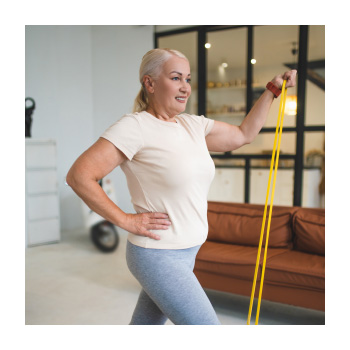
The study compared the effects of daily supplementation with 1,000mg of vitamin C and 335mg (equivalent to 500 IU) of vitamin E versus a placebo on 60 women with sarcopenia (ages 60-75) undergoing a resistance exercise program for 12 weeks. Before the training program, participants were assessed on several physical parameters, including muscle mass, strength, and physical performance; serum levels of vitamin C and E and other antioxidant and inflammatory markers were also measured. Participants then completed the training program, which included three sessions per week, before being reassessed for all of the physical and serum markers tested at baseline.
While all participants saw improvements over baseline, there were additional improvements in the vitamin C and E group compared to the placebo group across all variables measured. The antioxidant group saw significant improvements in lean arm mass and skeletal muscle mass. Additionally, the antioxidant group outperformed the placebo group in handgrip and knee extension strength.
When it came to serum markers, the antioxidant group significantly increased their vitamin C and E levels and saw a reduction in several oxidative stress markers, as well as the inflammation marker IL-6. The results of this study highlight how vitamin C and E supplements are valuable tools in supporting resistance training and their risk factors in older women with sarcopenia.
Anxiety disorders are the most common mental health conditions in the United States, with an estimated one-third of adults experiencing an anxiety disorder at some point in their lives.2 A recent study published in Molecular Psychiatry3 suggests that low choline levels in the brain could be a contributing factor.

In this systematic review and meta-analysis, researchers examined 25 studies assessing brain chemistry in 370 individuals with anxiety disorders, including generalized anxiety disorder, panic disorder, and social anxiety disorder, and 342 individuals without anxiety. Using an MRI-based imaging technique, they measured the concentration of various brain metabolites. When comparing the two groups, individuals with anxiety disorders had, on average, approximately eight percent lower total choline levels in cortical brain regions. This difference was most pronounced in the prefrontal cortex, a region involved in thinking, decision-making, and emotional regulation.
Choline is an essential nutrient that serves as a key structural component of neuronal cell membranes and supports neurotransmitter synthesis and signaling. Notably, previous research shows that about 90 percent of Americans do not meet the recommended daily intake for choline.4 This shortfall is partly due to the fact that our modern diets lack top food sources of choline like organ meats and eggs. Additionally, many multivitamins contain little to no choline. Choline supplements can help bridge the gap, providing an easy, affordable, and reliable way to support healthy and optimal choline levels, and in turn, brain health and mental wellbeing.
Sign-up for {N}power to get exclusive discounts, newsletters, members-only features, and more!