 Preferred Store:
 My Account Sign-In


Sign-up for {N}power to get exclusive discounts, newsletters, members-only features, and more!
At Natural Grocers, we strongly believe that our food choices have the potential to affect real change. It’s one of the reasons we’re in this business. We know that the way food is raised matters and this is no truer than with beef.
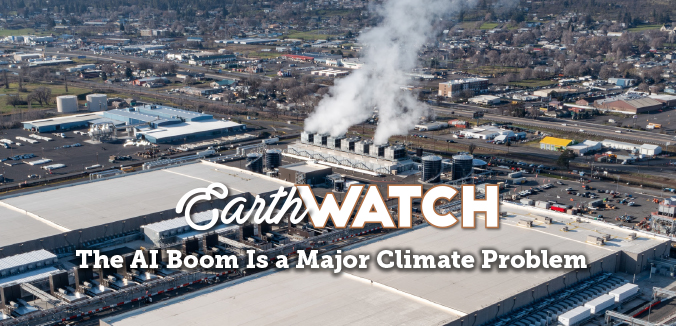
"Data centers are “the largest single points of consumption of electricity in history."
— Jesse Jenkins, Princeton climate modeler, speaking to The Atlantic in 20261
More than 40 percent of cancer cases and deaths are linked to modifiable risk factors, according to an American Cancer Society study. Cigarette smoking is number one, followed by excess body weight and alcohol consumption.
While this column often investigates the dark side of conventional agriculture and similar topics, this month we'd like to turn the spotlight on positive happenings at a handful of planet- and people-focused organizations. The small actions of a few people who care equal big wins for planet Earth!
“Forever chemicals,” a tenacious group of chemicals—per- and polyfluoroalkyl substances, or PFAS—are quietly increasing as active ingredients in pesticides, creating another avenue for consumer exposure through contaminated soil, crops, and drinking water.1 2
It’s summertime, and the Dad Jokes come easy (here’s looking at you Father’s Day!), and we believe the healthy living should too! So, how about we get barefoot in the grass and watch the clouds drift by, while counting the ways we help make good4u™ summertime fun an easy choice.
You care about your footprint on the planet. You buy sustainably produced food, recycle, conserve energy at home, and keep your showers short. But how long has it been since you’ve asked ChatGPT a question? Because with billions of daily interactions, AI is racking up an enormous environmental footprint.1
Once, in a farmer's field, a billion tiny soil organisms were finally remembered, and the farmer's focus shifted from how much a crop could yield to how future harvests depended on the soil being healed. Once, in a neighborhood grocery store, the proprietors said, no more—our standards for food must place human and environmental health over profit.
Will you be bringing a basket of early strawberries? Bright red and juicy sweet, the kind we can smell as you approach? Or will it be a bundle of rhubarb, sharp and tangy, and begging to be turned into pie?
How much does your daily hygiene routine have to do with the quality of the air you breathe? More than you may think. “We all have a personal plume,” or a trail of chemicals we leave in our wake as we go about the day, according to Matthew Coggon, scientist at the Cooperative Institute for Research in Environmental Sciences (CIRES) and lead author of a recent study on urban emission patterns.
“No river is safe now. No beach is safe."
— Iowa resident Joe Henry1
“Let paraquat be your plow,” urged a 1972 Chevron Chemical Company ad in the No-Till Farmer magazine.1 The ad promoted a new approach to preparing the ground for planting: skip tillage—the longstanding method of uprooting weeds and unwanted vegetation—and spray the soil with potent pesticides like paraquat instead.2 3 Fifty-plus years la
Sign-up for {N}power to get exclusive discounts, newsletters, members-only features, and more!